Home/Suspension & Lift/Shocks, Struts & Suspension
Shocks, Struts & Suspension
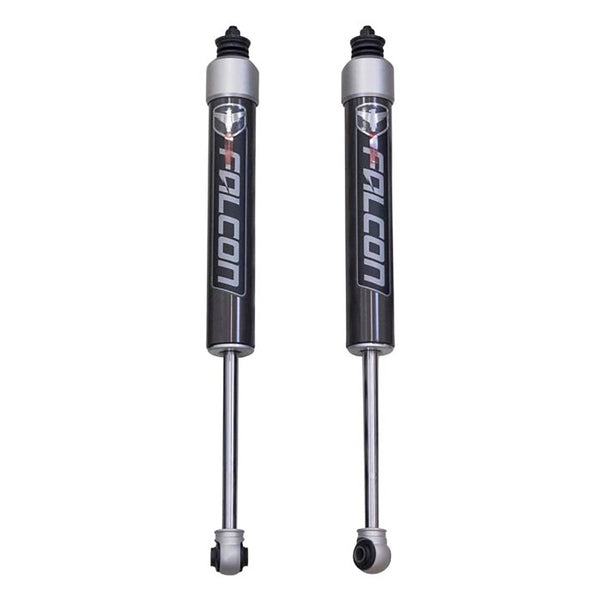

Shocks, struts and damping hardware — over 4,000 parts fitting Jeep, Ford, Chevrolet, GMC, Toyota and other makes, from Bilstein, Skyjacker, Ridetech and more.
Ride quality lives here. Monotube and twin-tube shocks, complete strut assemblies, coilovers and remote-reservoir dampers — Ridetech Suspension, Skyjacker, ICON Vehicle Dynamics and more. Shipped to every province, priced in CAD.
A shock does not hold the vehicle up; the spring does that. The shock controls how fast the spring is allowed to move, which is why a truck that bounces after a bump needs damping and a truck that sags under load needs spring. Twin-tube dampers are the quiet, compliant, inexpensive answer for a vehicle that mostly sees pavement. Monotubes shed heat far better and stay consistent on washboard and long gravel, at the cost of a firmer ride when the road is smooth.
Match the damper to the height you are actually running. A shock sized for stock ride height on a lifted truck runs out of travel and tops out; one sized for a lift on a stock truck never uses its stroke. If you have lifted the vehicle, the shock length is part of the kit, not an afterthought.
Most listings here carry verified vehicle fitment, so you can filter to your own year, make and model rather than guessing from a part number.
Not sure whether you want a level or a lift? Our lift kit basics guide walks through the difference, what each costs you in ride and geometry, and what winter changes.
The deepest ranges here come from Rancho Suspensions (244).
Squatting under a load? Our guide to helper springs and air suspension compares the two, and explains what each does not fix.
Choosing a lift for a Super Duty? Our Ford F-350 Super Duty lift kit guide covers leveling versus lifting and what a lift pulls in behind it.
Common questions
What is the difference between a shock and a strut?
A shock damps suspension movement only. A strut does that and also forms part of the suspension's structure, carrying the spring and locating the wheel, which is why replacing one is a bigger job.
When do truck shocks need replacing?
Symptoms rather than mileage: the truck floats over dips, the nose dives under braking, or the tires show cupped wear. Leaking fluid on the shock body is the clearest sign.
Do you replace shocks in pairs?
Yes, per axle. A new shock next to a worn one gives uneven damping side to side, which is felt most in a hard corner or an emergency stop.
Do lifted trucks need different shocks?
Above about two inches, yes. Factory shocks are sized for factory travel, and a lift moves them outside it — a shock at full extension is not damping anything.